

Let us start with something simple. Imagine you are running a small lemonade stall.
You’re selling glasses all day, customers love it, and by evening you have “sold” Rs 1,000 worth of lemonade. Feels like a great day. But when you check your pocket, you only have Rs 800 because some people said they’ll pay later. You’ve already spent Rs 300 on lemons, sugar, and cups.
So even though your profit might look like Rs 700 on paper, the actual cash you have left is Rs 500. That Rs 500 is what really matters. That’s exactly what operating cash flow is.
I publish 10+ blogs on my Substack every week. But send only one to your inbox. Keep visiting to read more. Join Whatsapp Community to get all posts.
What is operating cash flow?
Operating cash flow is the actual cash a business generates from its day-to-day operations.
It tells you whether the business is bringing in real money from doing what it’s supposed to do, not from loans, not from selling assets, not from accounting adjustments.
Think of it like this:
Profit is what your report card says.
Operating cash flow is what your wallet says.
Different businesses, different realities
Once you start looking at real companies, this gets even more interesting.
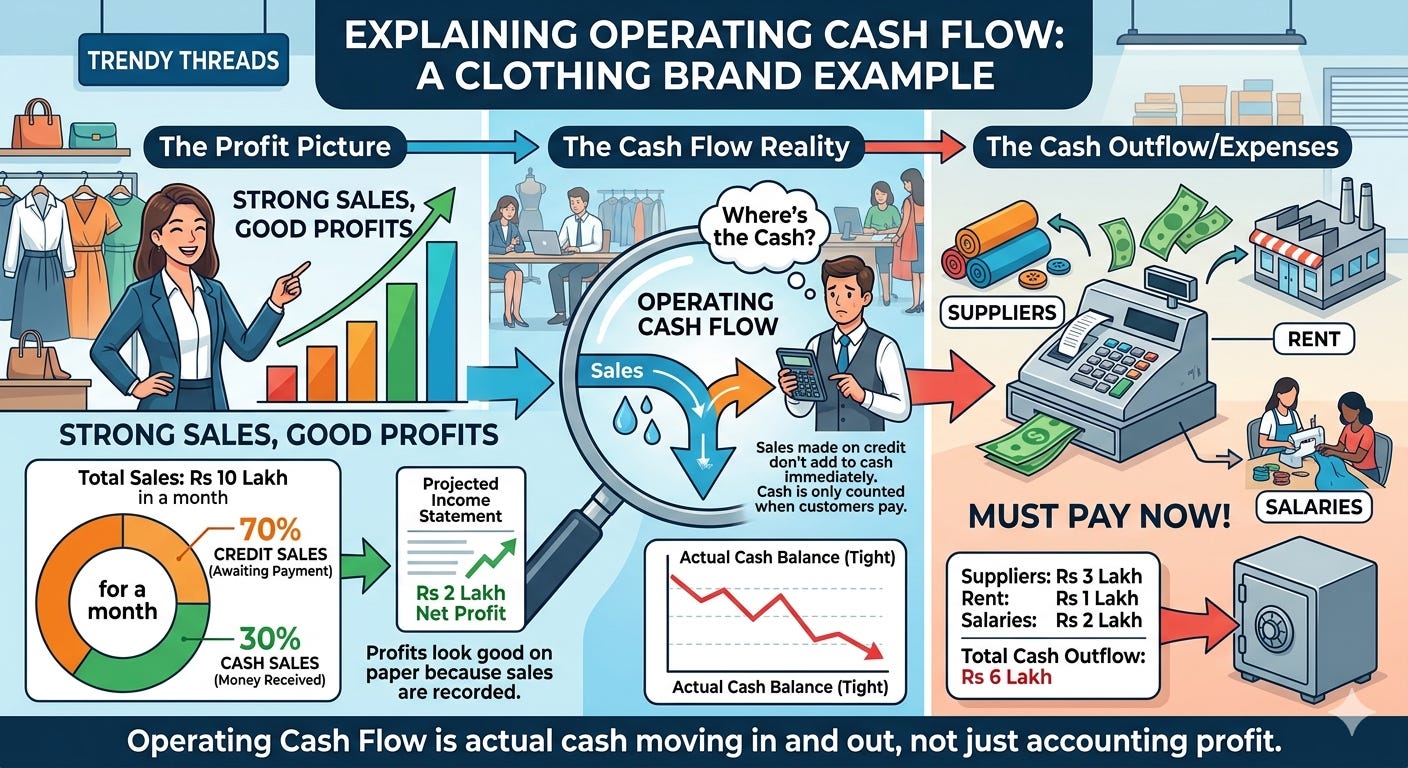
A clothing brand might show strong sales of Rs 10 lakh in a month, but if most of those sales are on credit and customers haven’t paid yet, the cash hasn’t actually come in. Meanwhile, the company still has to pay suppliers, rent, and salaries. So profits look good, but cash is tight.
Now compare that to a restaurant. Customers pay immediately. Every plate sold brings instant cash. Expenses go out daily too, but the cash cycle is quick and visible. That’s why restaurants often have cleaner, more predictable operating cash flow.
Then there are software companies. Many of them collect money upfront for annual subscriptions. So they might receive Rs 1 crore in cash today, even though they’ll deliver the service over the next 12 months. On paper, profits may look lower, but cash flow looks strong because the money is already in the bank.
And then you have construction companies. They may be working on massive projects, booking profits as work progresses, but actual payments come in stages and often with delays. So profits can look healthy while operating cash flow stays negative for long periods.
Same concept. Completely different outcomes.
So why should you actually care about operating cash flow?
Because this is where reality shows up.
A company can report high profits and still struggle to survive if cash isn’t coming in. Salaries, rent, loan repayments, everything runs on cash. Not on accounting profits.
Operating cash flow helps you answer a much more important question:
“Is this business actually generating money from its core operations?”
If the answer is consistently yes, that’s a strong business.
If the answer is no, even with rising profits, that’s a red flag.
What it quietly reveals about a company
When you start tracking operating cash flow, you begin to see things that profit numbers hide.
You can spot whether customers are actually paying on time or just inflating revenue on credit. You can understand if the company is efficiently managing its working capital or constantly chasing cash. You can even detect early signs of stress, long before it shows up in profits.
In many cases, cash flow problems show up months or even years before profit problems.
More Interesting Articles for you
The simple takeaway
Every business tells two stories.
One is told through profit.
The other is told through cash.
And if those two stories don’t match, trust the cash. Because at the end of the day, a business doesn’t survive because it looks profitable. It survives because it keeps generating cash.
About me - In the last few years, I have noticed that many investors struggle with basic investment concepts. To address this, I have started a personalized newsletter offering easy-to-understand, actionable insights to help investors make better decisions. I have written over 5000+ financial blogs and want to share my knowledge and investing journey with you so you can become a confident investor. Join my journey. SUBSCRIBE NOW